You Can't Argue With Gravity
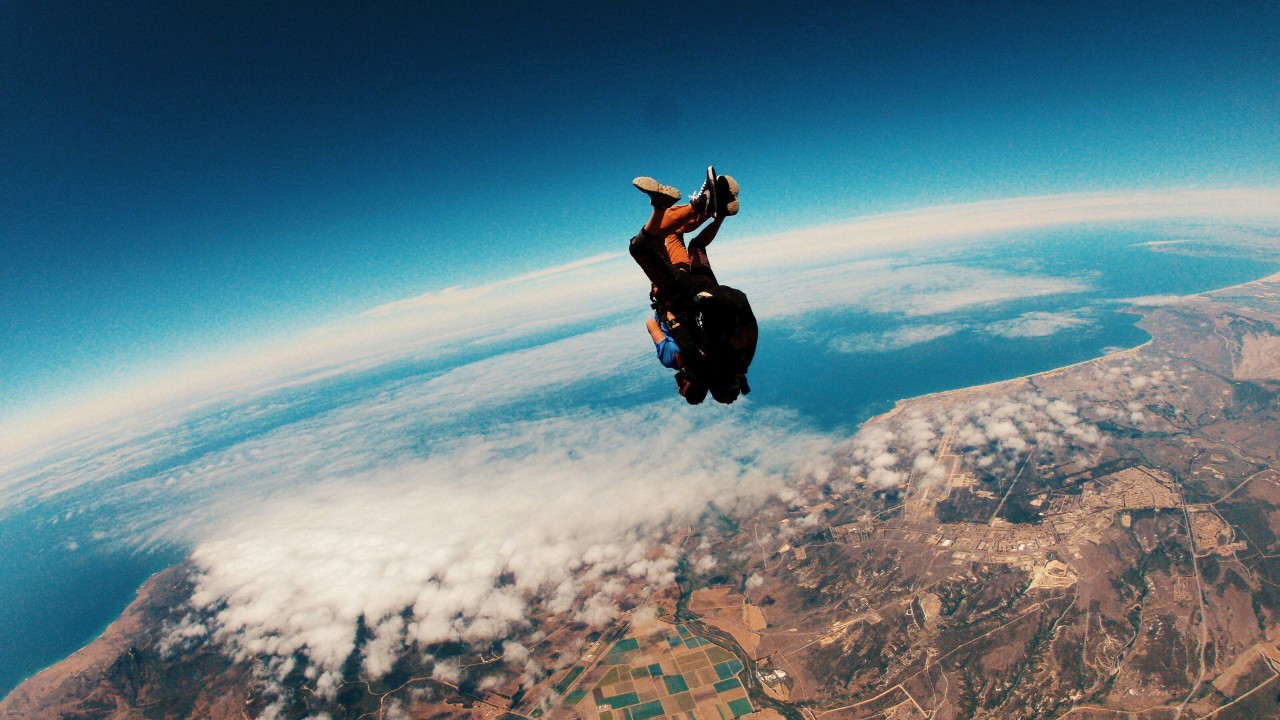
Photo by Muzammil Soorma on Unsplash
Reality doesn't care what you believe. The hard part is telling what's real.
A pilot who flies into cloud with no instruments has about 178 seconds to live. Three minutes. Then he loses control, and that's that.
In the early days of flying, pilots kept dying the same baffling way. They'd take off on a dark night, climb away and then fly straight into the ground, just past the end of the runway. Engine running perfectly. Nothing wrong with the aircraft at all. It took years to work out why, because the fault wasn't in the machine. It was in the pilot's own head.
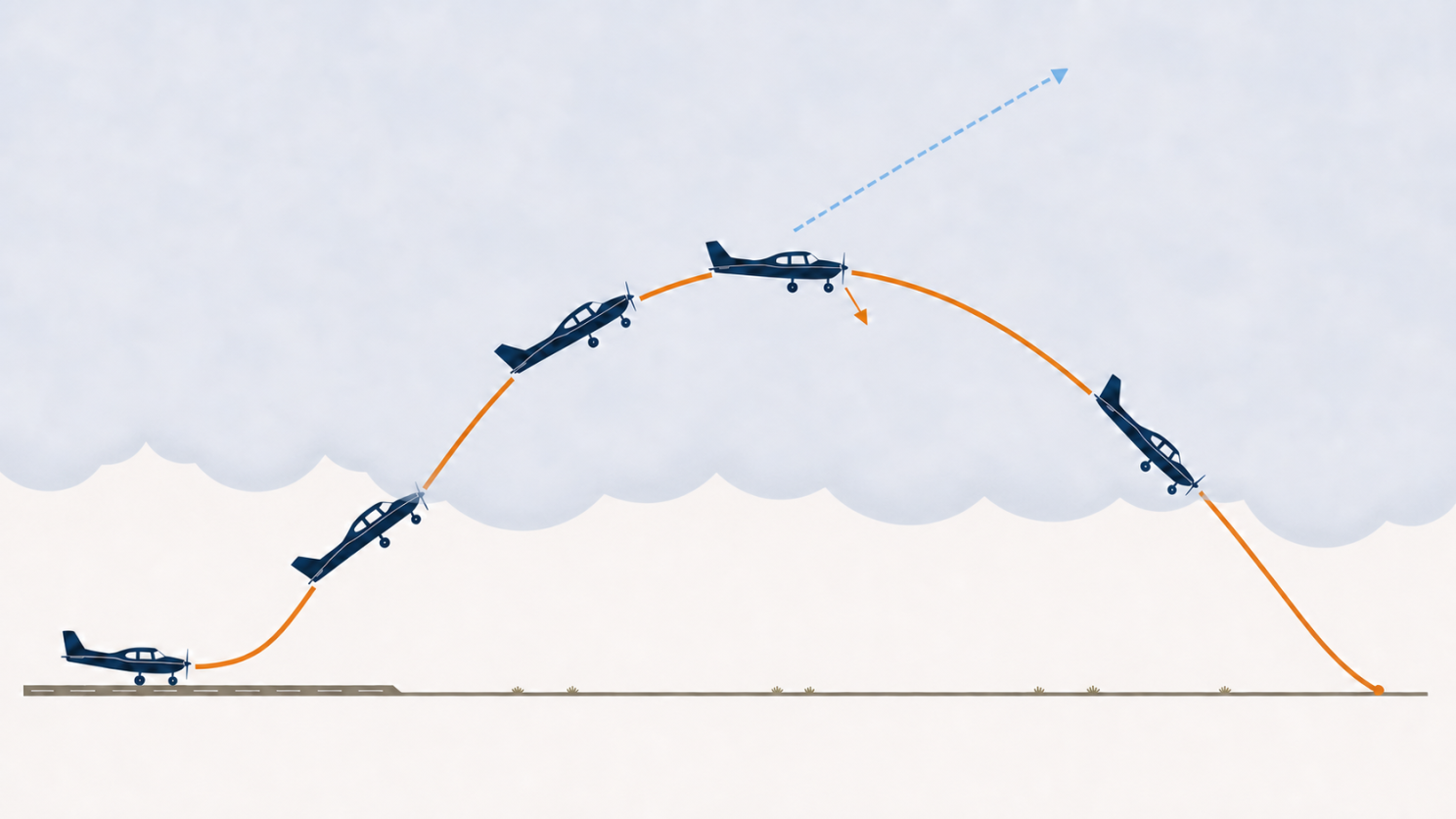
Here's what happens. When an aircraft accelerates hard, the force that presses you back into your seat feels exactly like the force you'd feel if the nose pitched steeply up. Your inner ear can't tell the two apart. So as you power into the climb, every instinct screams that the nose is too high and you're about to stall. By day, you glance at the horizon, see it's a lie, and ignore it. On a black night, or in cloud, there's no horizon to check it against. So you trust the feeling. You ease the stick forward to bring the nose down, and fly a smooth, calm, perfectly controlled descent into the ground. It feels right the whole way down.
Both times, the killer is the same, and it isn't fear or panic. It's a feeling; powerful, convincing, and completely wrong. The pilot can't see what's real, so he trusts what he feels. And what he feels kills him.
You're never going to fly a jet, and it doesn't matter, because you've got the same problem. You can't see clearly either. None of us can.
Every real decision you make, the job, the money, the person you trust, the risk you take, you don't make it on reality. You make it on your picture of reality. What you think is true. What you think is happening. What you think comes next. Get that picture right and the decision almost makes itself. Get it wrong, and it doesn't matter how clever you are or how long you think about it. You're building on the wrong picture, and the wrong one feels every bit as solid as the right one.
And here's what's changed. Building a true picture of the world has never been harder than it is right now. Not because the truth has gone missing. Because you can't tell what it is any more.
How it happened
It happened in stages, and each one made the next one worse.
It started with speed. There used to be a simple rule in serious journalism: two sources before you run a story. Not one. Two. It slowed things down, and that was the point; the delay was the price of getting it right. Then came rolling news, around the clock, every channel racing every other one. When you've got every minute to fill and a rival who'll beat you by ninety seconds, the first thing over the side is the checking. Being first quietly beat being right.
Then the internet took the gate off altogether. Anyone could say anything to everyone. Mostly a good thing, and also the moment that old 2-sources rule stopped being the baseline and turned into a habit a few papers still bother with.
Then came the bots. Right now there are thousands of websites pumping out "news" written entirely by machines. No reporter. No editor. Nobody who was there. Built to look real, built to catch your eye, and multiplying faster than anyone can shut them down. A huge slice of what floats past you every day was written by no one, to mean nothing, in exchange for your attention.
Then, on top of all of it, AI. Now, I use it every day, so hear me out, because the lazy take is wrong. The problem isn't that AI lies more than people do, it doesn't, people are wrong all the time. The problem is the speed, the volume, and above all the confidence. It industrialises plausible error. Someone who isn't sure sounds unsure. AI is wrong in the exact same voice it's right: instantly, in clean, calm, perfect sentences, with no hint of doubt, at a scale no liar in history could dream of. It hands you an answer that looks flawless and never once says "I think."
And then the politics, where it stops being an accident. Political actors learned to exploit the same weakness. Once audiences begin sorting facts by identity; believing a claim because it came from "our side", contradiction stops being disqualifying. The shared ground hasn't disappeared. But it has become harder to stand on together.
The post-truth world
Put it all together, the speed, the open gate, the bots, the confident machine, the missing common ground, and you get what has come to be called the post-truth world.
The name doesn't mean truth no longer exists. It means truth has become harder to identify, reach, and trust. When people can't reliably pick it out from the noise, they start making decisions without it; and often never notice when they crossed the line
So, what do you do?
You can't fix the world. But you can get much harder to fool. There are a few habits that genuinely work, and none of them are complicated.
Read sideways, not down. This is the big one, and it's the opposite of what feels responsible. Stanford researchers watched three groups judge whether websites were trustworthy: professional fact-checkers, PhD historians, and ordinary students. The historians and students did the careful thing. They stayed on the page, read closely, studied the site's polished "About" section, and got fooled, because a good fake is built to reward careful reading. The fact-checkers did something almost rude. Within seconds they left the page and opened new tabs to see what the rest of the world said about the source. They were faster and far more accurate. So stop asking "does this page look legit?" - it's designed to. Leave it, and ask who's behind it and what everyone else says. That answer is never on the page itself.
Find the source. Most nonsense is a claim ripped out of its source. A quote with the front half cut off, a photo from a different year, a number with no origin. Before you believe it, and long before you pass it on, trace it back. Where did this actually come from? What did it say before someone repackaged it? Stop the moment you feel the hit, too. That the flash of anger, the jolt of I knew it, the warm little rush of being right. That feeling is not evidence. It's the tell that you're about to swallow something whole.
Split the person from the claim. Two different questions, and we jam them into one: how much do I trust who's telling me, and how well is the thing actually confirmed? A source you love can be repeating a rumour. A source you can't stand can be sitting on hard fact. Weigh them separately, or you'll believe your friends and wave away the truth on the same lazy reflex.
Treat confidence as a warning, not a green light. The most certain voice in the room - the pundit, the poster, the perfect paragraph off the screen. They don't earn anything from being sure. Certainty is a style, not proof. Listen past it and look for what's actually known. And when something stops making sense, don't push on and hope. Stop, and build a better picture first.
Underneath all of it is one honest habit: know what you actually know, what you're only assuming, and what you're simply hoping. Whatever you do don't let the last two quietly promote themselves to the first. Most bad calls aren't stupidity. They're a hope, or a guess, that got treated as a fact.
None of this is about turning into a cynic who believes nothing. That's just being wrong in the other direction. It's about slowing down enough to tell the three apart before you bet anything on them.
You can't argue with gravity
Here's the freeing part. Reality doesn't care. It doesn't take a vote or check how sure you felt. Believe whatever you like about gravity — gravity has no opinion about you.
Get your picture of the world wrong and the world still turns up to collect. The ground doesn't care how right it felt on the way down.
So do the unfashionable thing. Slow down. Check where it came from. Separate what you know from what you hope. Build the most honest picture you can and hold it loosely enough to change it when the facts do.
Because you can't argue with gravity. And you make very poor decisions about jumping out of windows if you don't believe in it.