The leaders people actually remember were good at one thing
You can be a good boss without being a leader.
Plenty of people are. Organised, fair, well-liked. Their teams run smoothly. But they're not leading. They're managing. And when you press on the difference, it comes down to decision-making.
Leadership has three conditions.
Set direction. Provide support. Take accountability.
Meet all three and you're leading. Miss any one and you're something else: a manager, a mentor, a committee chair. All potentially useful. None of them leadership.
All three conditions, at their core, are about decision-making.
Setting direction is a decision.
When I joined Tourism 365, the business had a legacy operating model and a $30M revenue opportunity it couldn't reach. Setting direction meant deciding what the business would be — and equally, what it would stop being.
That sounds like strategy. But strategy is just a series of decisions made in advance.
Direction without a decision behind it is a wish. Every leader who's told a team "we need to be more customer-focused" without changing anything has experienced this. The words were there. The decision wasn't.
Providing support is a decision multiplier.
When I ran airside operations at Dubai International, I had over 3,000 people on shift. I couldn't make every call. Nobody can at that scale.
What I could do was build the conditions for good decision-making: clear accountabilities, the right information in the right hands, a framework for knowing when to escalate. And I could be present when someone needed to work through a hard call rather than just be told what to do.
The manager who says "just come to me if you're not sure" isn't providing support. They're building a bottleneck - and a team that can't function without them.
Accountability is about owning the decision.
At Meeting Point International, we reduced customer complaints by 95% in 12 months. New standards, new processes, a closed-loop recovery system. But it started with a decision to treat service quality as a measurable, accountable outcome rather than a vague aspiration.
When it worked, I owned that. When things didn't work, I owned that too.
Accountability gets dressed up in language about culture and psychological safety. Those things matter. But the foundation is simpler: are you willing to put your name on the decision?
Many people aren't. They hedge. They present options upward and wait for someone else to choose. They say "the team decided" when the team was waiting for them to lead.
Accountability doesn't mean you're never wrong. It means you were willing to commit.
So what does this mean for you?
A lot of ambitious people carry a quiet anxiety about this. Whether their judgment is actually good enough for the level they want to operate at. Whether they'll know what to do when the pressure goes up and the answer isn't obvious.
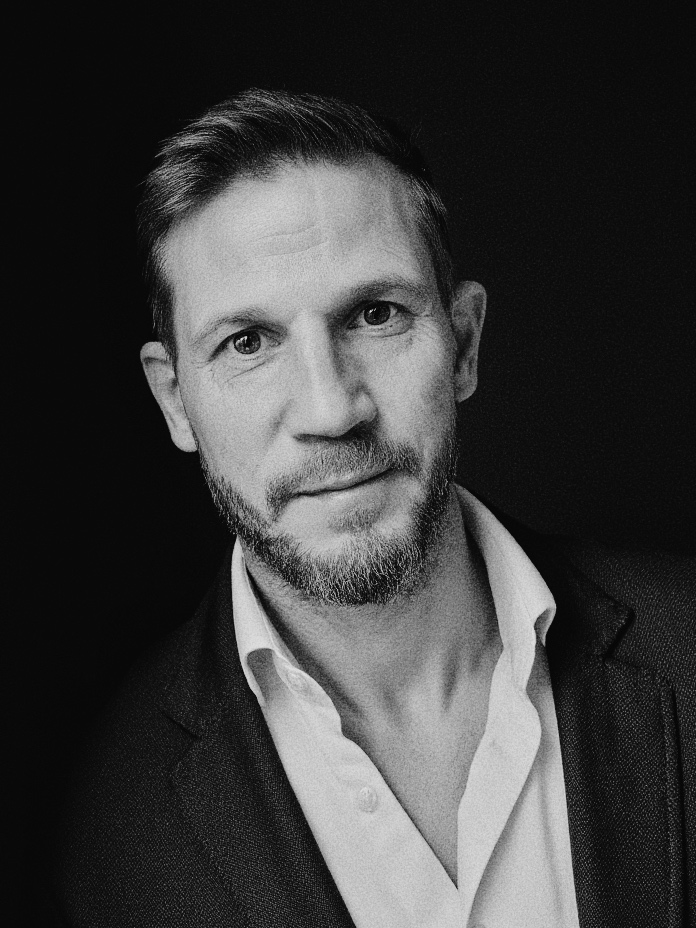
Here's what a career as a fighter pilot, management consultant, COO in the UAE and Oman, and Global Head of Operations across 17 countries actually taught me:
The leaders described as calm, decisive, someone who made good calls, weren't born that way. They worked at it. Decision-making is a discipline, and the gap between "I'm not sure my judgment is good enough" and "I know what to do when it gets hard" is one you can close.
The question is whether you decide to.
I spent 25 years making high-stakes calls in places that didn't forgive bad ones. Now I teach decision-making for people facing genuinely hard choices.
Find out more at wingmanexecutive.com.
First published on LinkedIn on 6 March 2026. Read the original article.