The Danger of Data That Looks Right
I nearly ejected from a fast jet over northern Norway because of a small error that looked perfect.
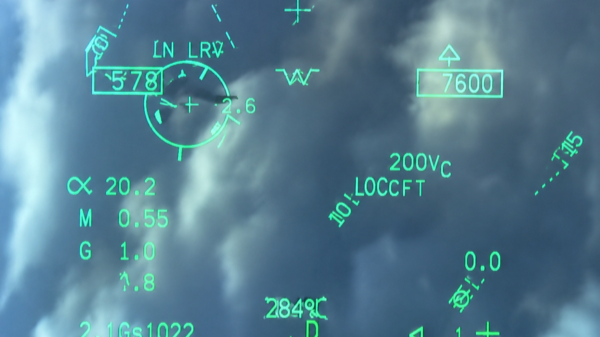
It was night, at the end of a very long day. Up there, in the dark, there's not much of a horizon to check anything against; you fly the picture your instruments give you. And my head-up display had drifted. Not failed, drifted. A failure would have been easy: the symbology drops out, you go straight to your backup instruments, you cross-check, you fly the jet. Instead it kept presenting, sharp and confident, just slightly wrong. And because it looked right, and because I was tired, I flew it. By the time I noticed, I was in a position bad enough that ejection was on the table.
The HUD didn't nearly kill me. My confidence in it did.
The same failure mode shows up in ordinary life too. If you live in the UAE, you may have experienced the everyday version of this yourself recently. GPS interference has been affecting the Gulf, and if you've driven through it you know the unsettling part: the map doesn't look broken. The blue dot sits there, crisp and certain, just in the wrong place. It tells you to turn where there's no turn. A blank screen would actually be safer, because a blank screen makes you look out the window and read the road signs. Instead, the screen stays confident, and confidence is persuasive.
That's the principle this article hangs on: no data is better than bad data. No data sends you looking. Bad data convinces you that you know enough.
Situational awareness
Fighter pilots have a name for the thing that nearly failed me that night. Situational awareness. You may have heard the phrase; in the cockpit it's not a buzzword, it's the thing we cared about more than almost anything else.
Situational awareness is simply this: a picture of what's going on around you that's accurate enough to act on. It has 3 parts, and they stack. Seeing what's actually there. Understanding what it means. And anticipating what's about to happen. Lose the first and the other 2 collapse with it, because you can't make sense of things you never saw.
Here's why it matters beyond aviation. Mica Endsley, the researcher who defined the field, reviewed commercial aviation accidents and found that "88 percent of those with human error involved a problem with situation awareness." A follow-up study of aviation incident reports broke the errors down by level, and the result surprises most people. 76% were failures at the first level, failing to perceive what was already there. Barely 3% were failures to anticipate what came next.
Pilots almost never got into trouble because they couldn't see the future. They got into trouble because they couldn't see the present. Human error, in most cases, isn't a failure of skill or nerve. It's a failure of the picture.
So we spent enormous effort building and maintaining the picture. Standardised radio calls in fixed formats, so a missing word told you something. Datalink sharing the picture between jets. Eventually, displays built into the helmet itself. But the technology was never the real discipline. The real discipline was that every piece of the picture carried a pedigree. A contact I held on my own radar was one kind of true. A contact reported by another jet was another. A position assessed by intelligence before takeoff was a third. We never let one category dress up as another. The picture was never complete, and we knew it wouldn't be. Good situational awareness was never about completeness. It was about knowing exactly how solid each part of the picture was.
Now here's the part that matters to you. You run on situational awareness too. Every decision you've ever made, hiring, signing, investing, leaving, ran on your picture of the situation. You've been building these pictures your whole life. You've just never given the process a name, and so you've never maintained it deliberately.
A feeling with a decimal place
Put it in a business you'd recognise. A founder signs a lease on a second warehouse because the cash flow forecast shows revenue covering it comfortably. The forecast looks like my HUD did that night: a proper spreadsheet, monthly columns, one decimal place. Trace it down. The biggest number in it exists because his main customer's procurement manager said, over coffee, that they'd "probably double the order next year." That sentence went into a cell, the cell went into a total, and the total went into a decision. Nobody lied. But a remark over coffee has dressed itself up as an instrument reading. He isn't deciding on a forecast. He's deciding on a feeling with a decimal place.
His situational awareness has drifted, exactly the way my HUD did. Quietly, plausibly, without a single alarm.
The psychology research explains why this happens so reliably, to clever people, without anyone noticing. We don't weigh information evenly. Decades of studies on what's called motivated reasoning show the same pattern: information pointing where we want to go gets waved through with barely a glance, while information pointing the other way gets cross-examined and sent back for more proof. The founder wants the warehouse. So "probably double" gets accepted on arrival, and the one flat month in the numbers gets explained away.
The dangerous part is that motivated reasoning does not feel like wishful thinking. It feels like being sensible. The story still has to be plausible, and once it is plausible, we experience the rest as reasoning. That's exactly what makes it dangerous. Bad data doesn't look bad, and neither does the thinking we do with it.
To be clear, the answer is not "only use verified facts." If you wait for verified facts you'll never decide anything. I've made plenty of calls on thin information, and so will you. Sometimes one conversation, a gut feel, or a pattern from experience is all there is, and it's enough. The trouble isn't using weak information. It's forgetting that it's weak. Somewhere between hearing a thing and deciding on it, the label falls off. "They'll probably double the order" becomes a revenue line. Nothing got more accurate. It just got more precise-looking, and precise reads as true.
The 30-second check
In the cockpit we maintained situational awareness with cross-checks, constant and deliberate. Here's the civilian version. It takes 30 seconds.
Before any decision involving real money, a signature, or a hire, take the 2 or 3 pieces of information actually carrying the decision. Not the supporting cast. The load-bearing ones. Ask one question of each:
How do I know that?
There are only 4 honest answers. I saw it myself. Someone told me. I inferred it. I want it to be true.
All 4 are usable. Only one of them is a fact.
If a load-bearing piece turns out to be "someone told me" or "I want it to be true," you don't have to abandon the decision. You have 2 good options. Downgrade your confidence and decide anyway, with eyes open. Or, better, let the label point at your next move: go and check the thing. Call the customer. Ask for the order in writing. One phone call would have saved that founder a warehouse lease.
And if you check and there's simply no answer to be had, leave the blank as a blank. An honest gap in your picture is worth more than a comfortable guess, because a gap tells you where to look, and a guess tells you the looking is done.
You're already building situational awareness for every decision you face. You always were. The only question is whether you maintain it the way a pilot does: knowing the picture is never complete, knowing which parts are solid, and cross-checking the parts that matter before you act on them.
The picture that nearly killed me over Norway was compelling. Compelling is not the same as accurate. The moment you can feel the difference between compelling and accurate, you are reading the one instrument that matters: your judgement about what you actually know.