Judgement Will Be the Next AI Gold Rush
When AI can produce more work than anyone can use, the scarce skill becomes deciding what to do with it. A wave of training is coming to sell you that skill. Most of it will hand you a process, and a process is not judgement.
Here is a prediction. Within the year, your inbox will fill with courses and workshops promising to sharpen your judgement for the age of AI. Some of them will be genuinely good. A lot of them will be an old decision-making process given a new name. Before you spend a penny, it is worth knowing the difference, because the two are not the same thing, and only one of them is worth paying for.
The bottleneck has moved
The first phase of the AI boom was about production. Tools, automation, the machinery for making more, faster than ever before. That phase rewarded the people who could build and implement.
It is ending. When a machine can generate more work than a team can reasonably use, making the work stops being the hard part. Judging it becomes the hard part. Is this right? Does it matter? What do we act on, and what do we ignore? Who carries the risk if it is wrong? AI can produce the answer. It cannot tell you whether the answer deserves your trust. Someone still has to decide that, and that someone is fast becoming the whole job.
A new hard part is always a new thing to sell. Which is why judgement is about to be packaged and sold.
A process is not judgement
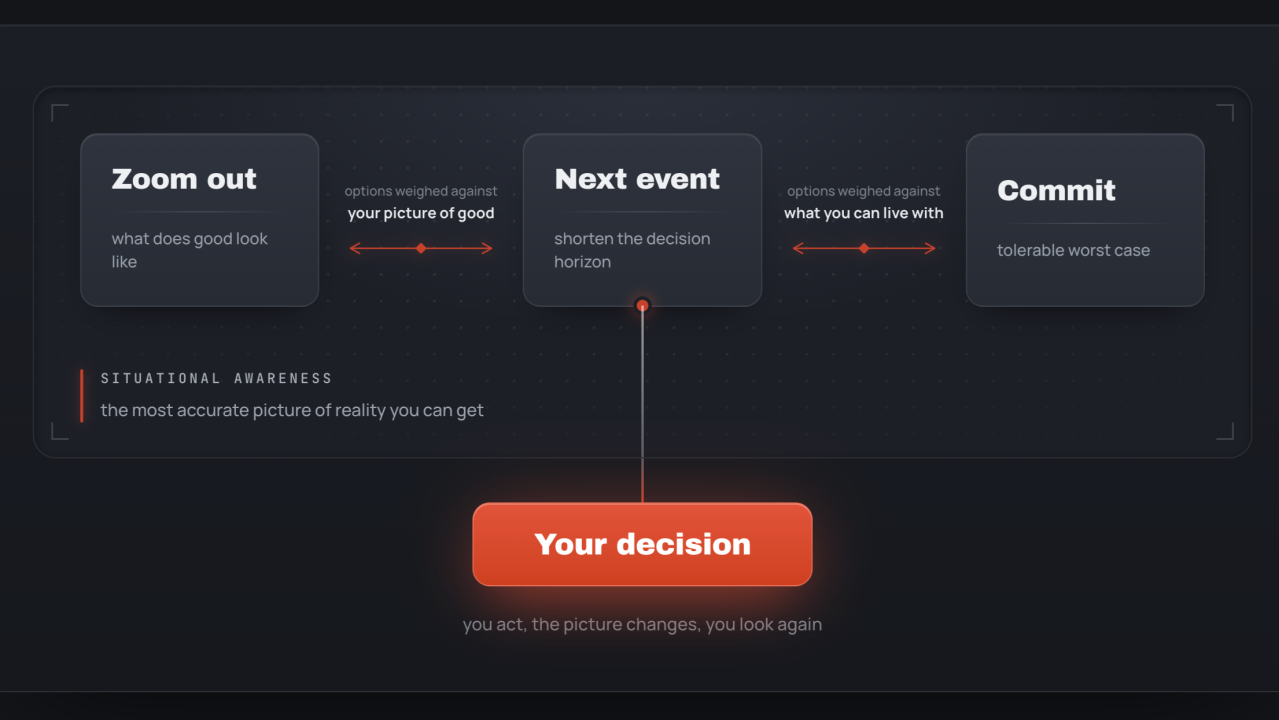
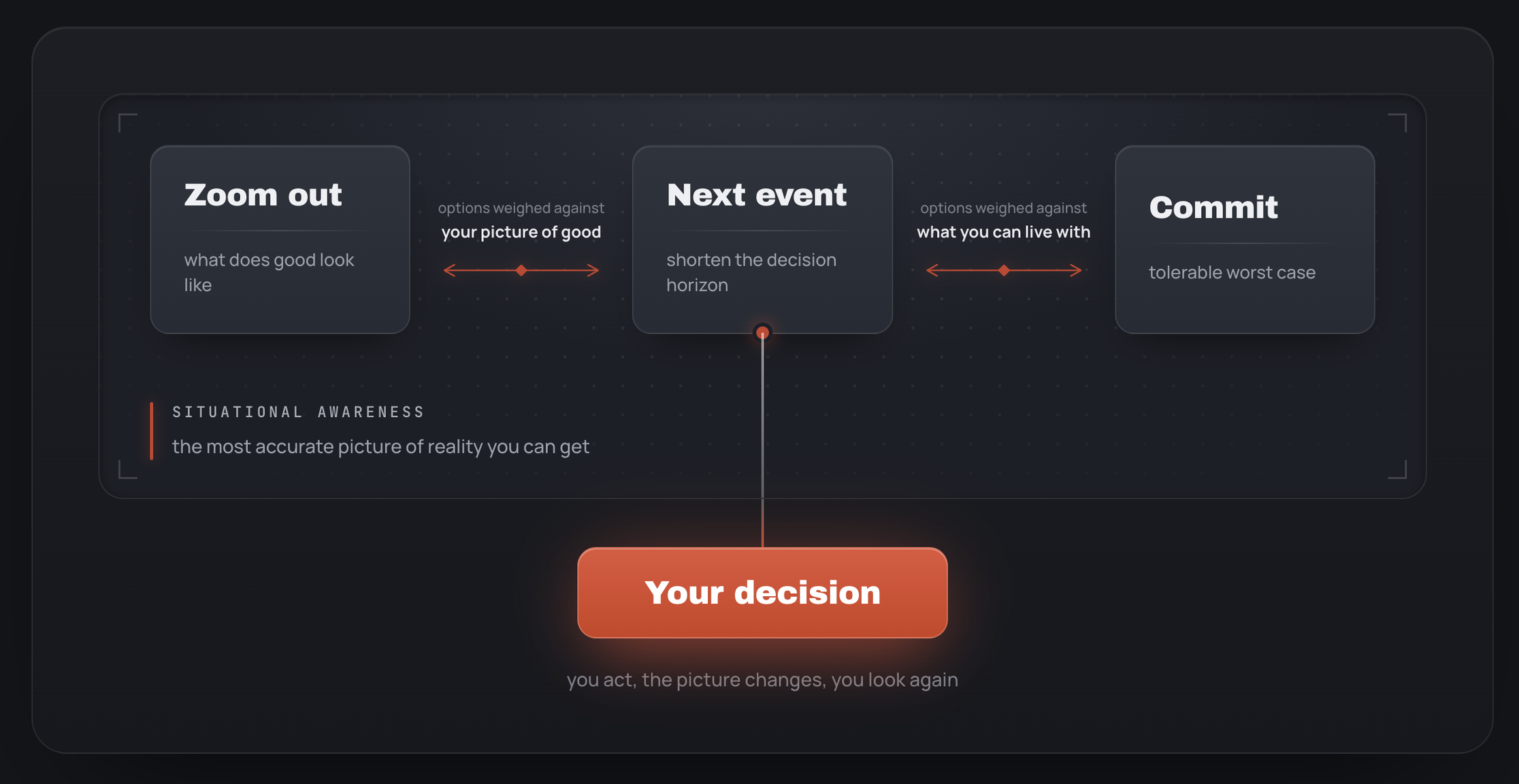
Watch how it gets sold. Most of it will arrive as a process. You know the shape of it. Define the problem, weigh the options, make the call, review how it went. A clean workflow with steps you can follow and a diagram you can put on a slide. Even capable people teach it this way, and not because they are cynical. They teach the process because the process is the part you can package and hand over.
But a process is not judgement. A process tells you the next step. Judgement tells you which situation you are actually in, and whether to act before you are sure. You can follow every box in a workflow and still make the wrong call, because the workflow never had to weigh what mattered. That part was always you, and no flowchart does it for you.
Decision researchers worked this out a long time ago. Gary Klein spent years studying how experts really decide under pressure, from fireground commanders to pilots, and found that they do not run through a list of options. They read the situation and know almost at once what matters, because they have met it a thousand times before. That fast, quiet recognition is judgement. You cannot hand someone a checklist and call it the same thing.
Why judgement is hard to sell honestly
Here is the uncomfortable part for anyone selling it. Because judgement is built through experience, most people assume you cannot really train it. You just accumulate it, slowly, over a career, if you are lucky and you pay attention. That assumption is what leaves the field open to the process sellers. If nobody believes judgement can be taught directly, then a tidy workflow with the word judgement attached to it is the next best thing, and it sells.
I do not accept the assumption. That is the problem I have spent twelve years on: how you build judgement in someone else, deliberately, faster than a whole career of hard-won lessons would.
What I actually spent twelve years on
I did not come to this from a book. I have run this discipline my whole working life. As a fighter pilot you make hundreds of decisions in a single sortie, most of them with far less than you would like to know, and every one of them counts. Later I carried the same discipline into business, through operational crises and through the slow, unglamorous work of fixing things that were failing. The setting changed completely. The way of deciding did not. What I have finally done is take that way of deciding and turn it into something I can teach, step by step, to people who do not have twenty years to learn it the hard way.
You already know the feeling all of this is really about. The call you have to make before you feel ready. The choice you cannot take back. That feeling is judgement working under load, and the good news buried in this whole argument is that it can be trained.
The test
So when judgement is suddenly everywhere and everyone is selling it, keep your test simple. Ask what is actually being trained. A process, or the judgement underneath it. Ask it of every provider who arrives with AI in their title, and ask it of me too. The honest ones will be able to show you.
Judgement was always the skill that decided how everything else turned out. AI has not changed that. It has just made it impossible to ignore, and impossible to fake for much longer.
If you want to discuss developing judgement for the decisions you face, contact Paul at Wingman Executive: https://wingmanexecutive.com.
Paul Littlejohn is a former Royal Air Force fighter pilot and senior operations executive. He is the founder of Wingman Executive.
First published on LinkedIn on 10 July 2026. Read the original article.